
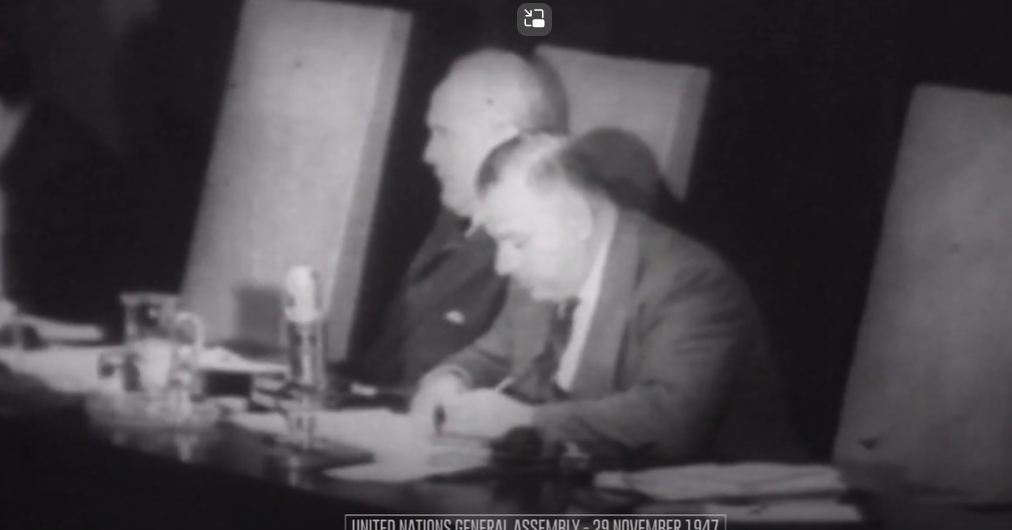
General Assembly Resolutions are not binding according to the UN Charter, under International Law. It was a recommendation. If it had been accepted by both the Jewish people and the Arab people, then a treaty would have been prepared reflecting this partition – that would have been binding. But those who suggest that today, whatever is being discussed in terms of a peace plan, that one should be complying with what was proposed in the Partition Resolution disregards the fact that binding resolutions from the UN do not come from the General Assembly.

Dr Jacques Gauthier
Jerusalem was not to be a part of the Arab state under the Partition Resolution. It wasn’t to be in the Jewish state. It was to be set aside – an international zone was going to be created – and after ten years there was going to be a referendum. According to many Jewish leaders who were involved in the acceptance of the principles of the Partition Resolution, the expectation was that since there was already a Jewish majority in Jerusalem in 1947, that after the Jewish state was created and doors to further immigration were open, that there would be a significant majority of Jewish people in Jerusalem and the referendum would result in the attachment of Jerusalem to the Jewish state. That was the expectation.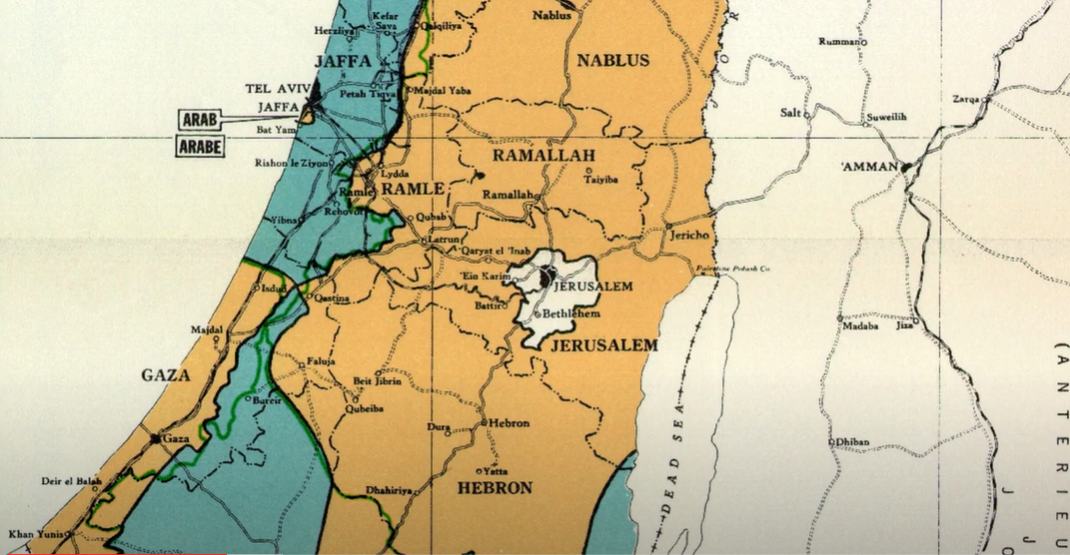
UN Partition
That expectation never came to pass because of Jordan’s illegal invasion and seizure of what became known as ‘East Jerusalem’. The War of Independence continued until March 1949, when armistice agreements were signed between Israel and her enemies. More than 6,000 Israelis had been killed – that was about 1% of the whole Jewish population. 2,000 of them were survivors of the Holocaust. The 1949 Armistice Lines left Egypt occupying Gaza, and Jordan occupying Judea and Samaria, which the Jordanian government re-named as ‘the West Bank’ of the Jordan River within the Kingdom of Jordan. The Jordanian occupation also included the eastern part of Jerusalem. The Armistice Lines – otherwise known as the ‘Green Line’ – were not to be regarded as international borders.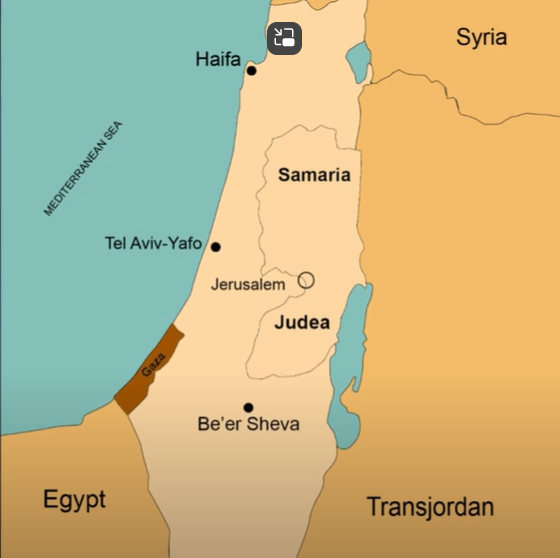
The Green Line
"The ‘Green Line’, which is simply a line on the map, drawn with a green marker by Moshe Dayan, when he was the Chief of Staff in 1949, when they were negotiating the Armistice agreement, signified the Armistice Line – the line where Israel’s forces reached on the day the ceasefire was declared. And in the Armistice Agreement with Jordan, the Jordanians insisted on putting in a provision saying that the Armistice Demarcation Line cannot under any circumstances be considered to be an international boundary."Dr Alan Baker The exact language of the Israel-Jordan Armistice Agreement, for example, signed in 1949, typifies all of the armistice agreements. “The basic purpose of the armistice demarcation lines is to delineate the lines beyond which the armed forces of the respective parties shall not move. As agreed upon by the parties, without prejudice to future territorial settlements or boundary lines, or to claims of either party relating thereto.” Dr Cynthia Wallace
Natasha Hausdorff
There is not international law on capital cities, per se. One might say there is a customary practice with the respect to the recognition of a state’s own selection of its capital city. Whether that falls under ‘international relations’ or ‘international law’ may be debatable. Nevertheless it’s fairly clear that countries have free reign to designate any part of their territory as their capital. / And in practice countries have their capitals at the seat of their government, and that is generally where other countries will locate their diplomatic missions so as to be in easy contact with the government of the host country.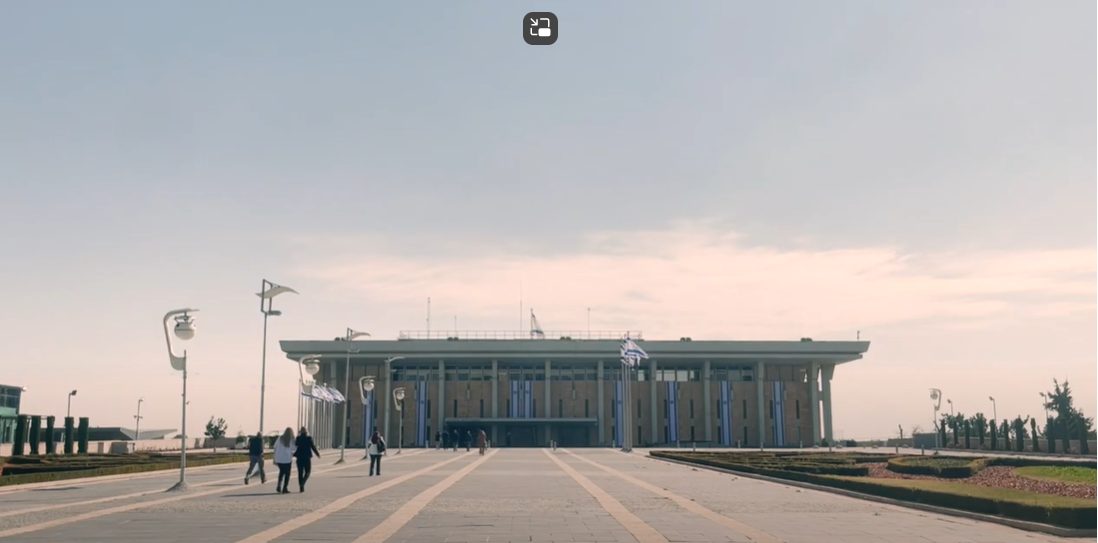
The Knesset
Jerusalem – it is the administrative centre of the land. Even when the British took over in Mandate times, they knew where to put their head offices in Jerusalem. It wasn’t Haifa or Tel Aviv. So naturally it is the administrative centre of the country, and historically that has been the case. But it is only the Jews who made it the capital of an independent nation here in all the centuries of Jerusalem’s history. David R Parsons, Attorney However, the former Mandatory power, Great Britain, refused to recognise it as Israel’s capital. Many other nations followed suit. The fact that the Jordanian invasion and seizure of the historic Jewish capital, with its holy sites, was illegal under International Law and a violation of the United Nations Charter was deliberately ignored. Another universal legal principle concerning Israel’s borders was also ignored, and still is to this day.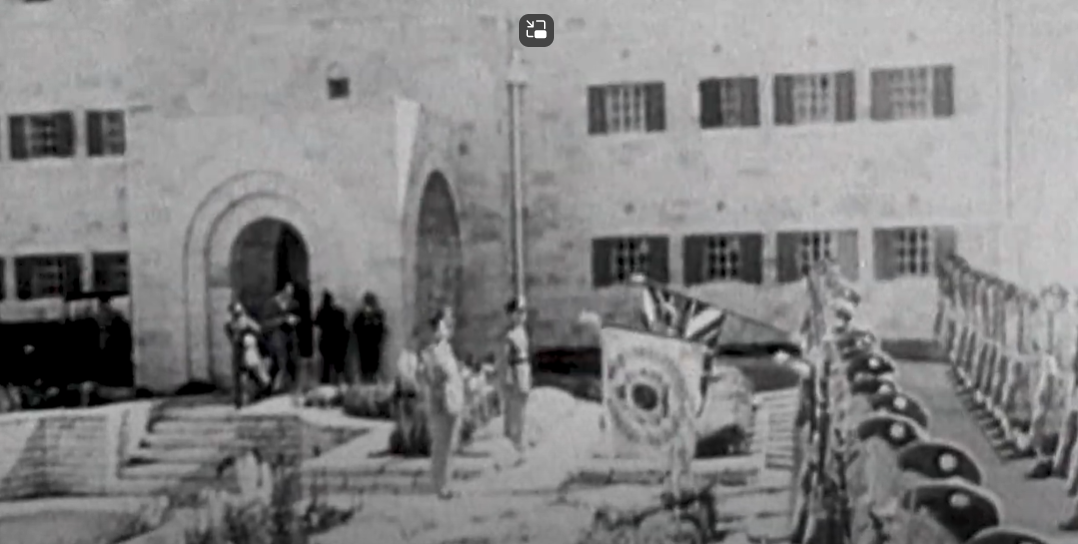
Jerusalem at time of British Mandate
There is a fundamental rule of customary international law that establishes the borders of newly emerging states at independence, as in Israel’s case in 1948. It was universally applied in the 19th century – it was applied in South America, later it was applied in Africa and Asia. And still later at the disintegration of the former Communist Federations. And really in all cases involving Mandates this was the default for all states emerging from these administrative areas. The universal rule for determining the borders of newly emerging states, at the moment of independence, dictates that a new state takes on the boundaries of the pre-existing administrative unit as its international borders. The rule is called Uti Possidetis Juris. / So Israel, as the only state to emerge from that Mandate territory in 1948, automatically assumed as its recognised borders, the administrative lines of the Mandate, and that includes ‘East Jerusalem’ and what was later called ‘the West Bank’, which was occupied by Jordan from Israel in the 1948/49 independence war. The legal status of that territory, applying this universal rule, is that Israel has been the sovereign since 1948.
Dr Einat Wilf
The Arab invasion of Israel in 1948, and the run-up to it, had another serious consequence, which is a political hot potato today, some 70 years later. The refugee problem. In May 1948, what is happening? Well, Israel has been invaded. It is an aggressive war by the Arab states. So a war is now going on. Inevitably when a war is being fought the population of [the Arabs] want to get out of the way. So, number one is the natural desire. Who started the war? The Arabs did. So is Israel to blame for these refugees that go out? (the late Dr Denis MacEoin) Arab refugees were created only as a result of Arab rejection of Partition, and especially their rejection of the right of the Jewish people to self-determination in the Land. Had the Arabs accepted Partition, had they accepted the United Nations proposal to divide the land into a Jewish state and an Arab state, as it was defined, no-one would have been displaced at all. Everyone would have stayed where they were. (Einat Wilf)
JDr Denis MacEoin
The Arabs in Palestine were being told: ‘You can leave now, you can get out of the way, let the armies – let the Egyptian army, the Jordanian army – let them do their work, and then when you come back you can have all the properties that belong to the Jews when we have wiped them out.’ / The Arab Higher Committee, which was the central body for the Palestinian Arabs was saying they must do it. (Dr Denis MacEoin) It is true that the Israelis expelled some Arabs, but they were mainly those in frontline areas and who were known to be cooperating with the enemy. But they were only a small percentage of those Arabs who became displaced. This is only the beginning of the story concerning the Palestinian Arab refugees and, as I said earlier, the political ramifications continue to this day.